
High-resolution audio – often called Hi-Res Audio – promises a listening experience with exceptional clarity, detail, and realism. To earn this label, headphones must reproduce sound up to 40 kHz, extending beyond the limits of human hearing. While most humans can not consciously perceive these ultrasonic frequencies, they contribute to the sense of precision that defines premium audio.
Traditional headphone drivers struggle to maintain accuracy at very high frequencies and therefore rarely achieve true Hi-Res performance. Wireless transmission technologies like Bluetooth introduce bandwidth limitations that can weaken the benefits of high-resolution content.
At USound, we explored how our MEMS (Micro-Electro-Mechanical Systems) speakers can overcome high-frequency limitations and help headphone manufacturers unlock the full potential of Hi-Res Audio.
MEMS Tweeters: Extending Frequency Response with Precision
High-resolution headphones need drivers capable of reaching beyond the 20 kHz range and the USound MEMS speakers excel here. When integrated into over-ear, closed-back headphones, they significantly extend the upper frequency response – delivering clean, stable output up to 40 kHz. This expanded bandwidth enhances the perception of detail and spatial accuracy.
Why Accurate Measurement Matters
To understand how headphones will sound on a human ear, it is necessary to measure them under realistic conditions. This involves using ear simulators and precise microphones capable of capturing ultrasonic frequencies. Small changes – such as how tightly ear pads are pressed or whether a tiny air gap remains – noticeably affect measurements.
During our evaluations, we used life-like ear simulators and ensured a solid seal around the earcup to prevent leakage. These steps allowed us to obtain reliable data and fine-tune the headphone performance with confidence.
Designing for Sound Quality: Creating a Balanced, High-Resolution System
Designing a Hi-Res headphone with MEMS speakers is an exercise in finding the right balance between accuracy, output, and acoustic harmony. Throughout our development, we compared our prototypes against industry-standard reference curves, such as the Harman AE/OE target response. These curves are built on listener research and help ensure that the added energy from the MEMS tweeter integrates naturally into the overall sound signature. Aligning the system to such references helps to achieve a listening experience that feels neutral, controlled, and engaging rather than overly bright.
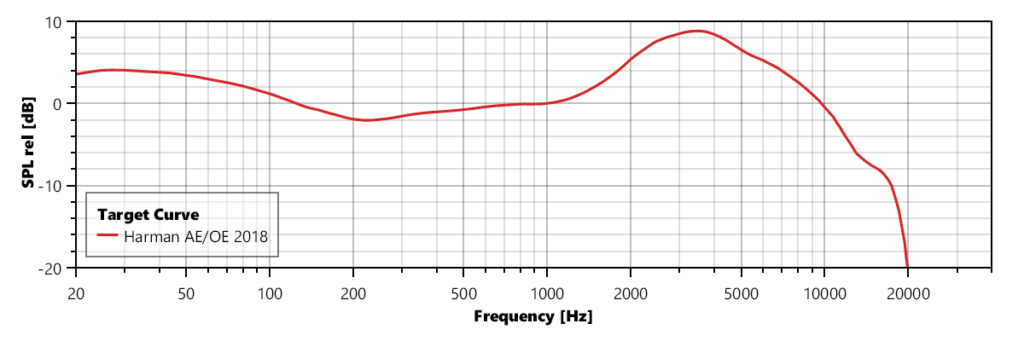
Figure 1: Harman AE/OE Reference curve
Achieving sufficient high-frequency sound pressure level is a key part of this. USound’s 6 mm Conamara tweeter provides strong SPL performance well into the ultrasonic range, ensuring that Hi-Res audio content is reproduced with authority. For headphone manufacturers aiming for additional headroom, two MEMS tweeters can be used in parallel to increase output without sacrificing efficiency.
But achieving high performance is not only about sound pressure level – it’s also about the way the drivers interact. Tweeter placement inside the earcup plays a crucial role in creating a balanced listening experience. Our internal tests across multiple positions showed that placing the tweeter centrally above the woofer delivered the smoothest blend and the most predictable superposition between the two drivers. This helps to mitigate interference effects and ensures that the tweeter’s extended bandwidth supports, rather than competes with, the woofer’s output.
Another important element in shaping the sound is controlling the tweeter’s back port. The Conamara tweeter includes a mesh covering the port, but depending on the design, leaving it open can lead to unwanted interference. Sealing the port creates a more consistent acoustic behavior and improves the system’s sound characteristics.
Finally, internal damping materials further refine the sound by controlling resonances and smoothing the response. Lightweight foams proved effective at reducing unwanted reflections while maintaining airflow, resulting in cleaner, more stable low-frequency behavior.
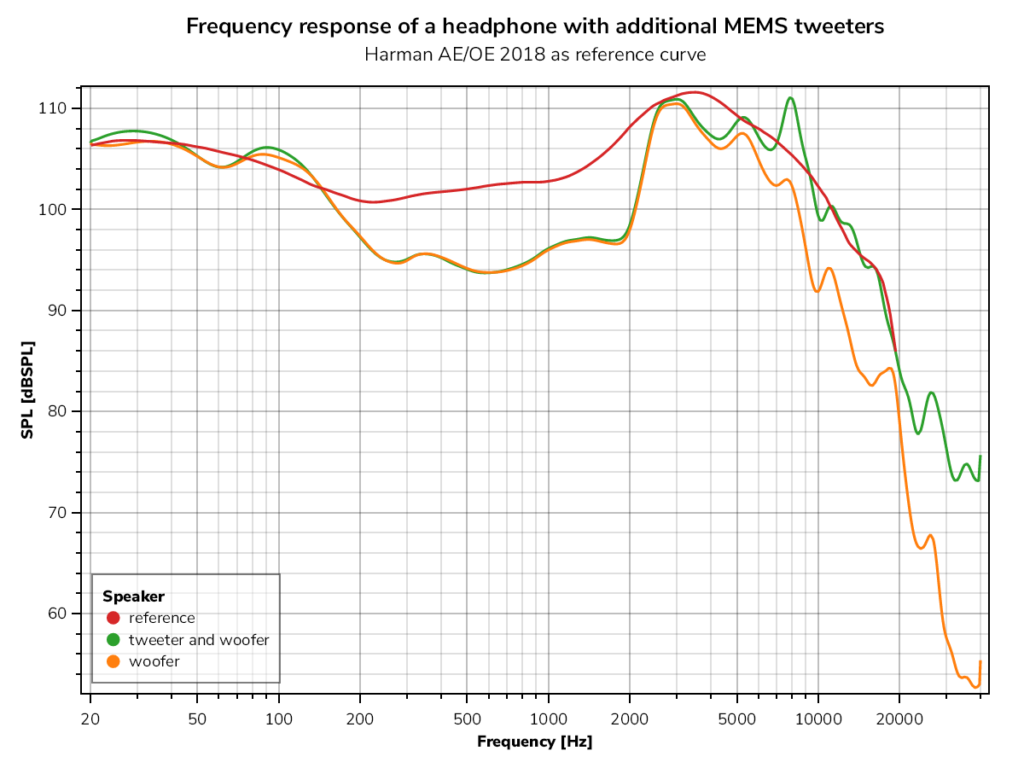
Figure 2: Frequency response comparison of an over-ear headphone with a woofer only and with a woofer and two USound MEMS speakers.
Together, these design considerations – reference curve alignment, sound pressure level calibration, driver positioning, back-port control, and damping – form a cohesive pathway toward delivering a true high-resolution headphone experience. The combined woofer-plus-MEMS speaker configuration delivers a more precise, spacious, and engaging listening experience – one that unlocks the potential of high-resolution content. Manufacturers can create headphones that meet and exceed Hi-Res standards – bringing listeners closer than ever to the original performance.

Michele Lucchi
Michele earned his degree in electronics and sound engineering in Graz in 2021. During his studies, he worked in the HiFi speaker sector, gaining hands-on experience in audio technology. Since 2016, he has been a member of the USound team, where he specializes in developing 3D sound headphones, evaluation boards, and prototypes, with a focus on electronic hardware design.